

Hey there! As a supplier of Scarf Jacquard Machines, I know how crucial it is to calibrate these machines properly for accurate pattern production. In this blog, I'll share some tips and tricks on how to do just that.
First things first, let's talk about why calibration is so important. A well - calibrated Scarf Jacquard Machine ensures that the patterns you produce are sharp, clear, and match the design exactly. If the machine isn't calibrated correctly, you might end up with blurry patterns, misaligned colors, or even completely wrong designs. This can lead to a lot of wasted time, materials, and money.
Understanding the Basics of a Scarf Jacquard Machine
Before we dive into the calibration process, it's essential to understand how a Scarf Jacquard Machine works. These machines use a system of hooks, needles, and wires to control the movement of the warp threads, which create the pattern on the fabric. The Jacquard mechanism reads a punched card or digital data to determine which warp threads should be lifted or lowered at each point in the weaving process.
Pre - Calibration Checks
Before you start the actual calibration, there are a few pre - checks you should do. First, make sure the machine is clean. Dust, lint, and debris can interfere with the moving parts of the machine and affect the accuracy of the pattern. Use a soft brush or compressed air to clean the Jacquard mechanism, hooks, and needles.
Next, check the tension of the warp threads. Uneven tension can cause the fabric to warp or the pattern to distort. Use a tension meter to measure the tension at different points along the warp. Adjust the tensioning devices if necessary to ensure that all the warp threads have the same tension.
Calibrating the Jacquard Mechanism
The Jacquard mechanism is the heart of the Scarf Jacquard Machine, so it's crucial to calibrate it accurately. Here's how you can do it:
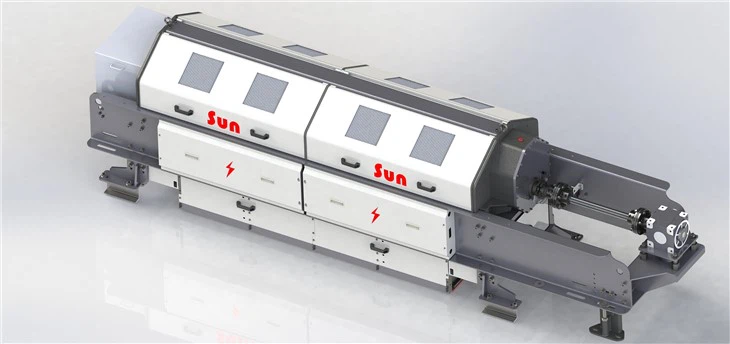

1. Check the Alignment of the Hooks and Needles
The hooks and needles in the Jacquard mechanism need to be properly aligned to ensure that the warp threads are lifted and lowered correctly. Use a small mirror to check the alignment. If the hooks or needles are misaligned, you can use a small tool to adjust them gently.
2. Set the Correct Jacquard Pattern Data
If you're using a digital Jacquard system, make sure the pattern data is loaded correctly. Double - check the file format, resolution, and color settings. If you're using punched cards, inspect them for any damage or errors. A single hole in the wrong place can completely change the pattern.
3. Test the Jacquard Mechanism
Run a test pattern on the machine. Start with a simple design to see if the Jacquard mechanism is working correctly. Watch closely as the machine weaves the pattern. If you notice any issues, such as skipped stitches or misaligned colors, stop the machine immediately and make the necessary adjustments.
Calibrating the Loom
In addition to the Jacquard mechanism, you also need to calibrate the loom itself. Here are some key steps:
1. Adjust the Reed
The reed is a comb - like device that separates the warp threads and helps to beat the weft threads into place. Make sure the reed is clean and free of any debris. Adjust the position of the reed so that it is parallel to the warp threads and at the correct height. This will ensure that the weft threads are evenly spaced and the fabric has a consistent density.
2. Set the Weft Insertion Rate
The weft insertion rate determines how quickly the weft threads are inserted into the warp. If the weft insertion rate is too fast, the fabric may be too loose. If it's too slow, the fabric may be too tight. Use the machine's controls to adjust the weft insertion rate based on the type of fabric and pattern you're producing.
3. Check the Take - Up and Let - Off Systems
The take - up system pulls the woven fabric forward, while the let - off system releases the warp threads at the correct rate. Make sure these systems are working smoothly and that the tension is consistent. You can use a tension sensor to monitor the tension during the weaving process and make any necessary adjustments.
Fine - Tuning the Calibration
After you've completed the initial calibration, it's time to fine - tune the settings. Weave a few more test patterns and carefully examine the results. Look for any small imperfections, such as slight color variations or uneven stitch density.
If you notice any issues, make small adjustments to the Jacquard mechanism or the loom settings. For example, if the colors are slightly off, you may need to adjust the color settings in the pattern data. If the stitch density is uneven, you can adjust the tension of the warp or weft threads.
Using High - Quality Materials
The quality of the materials you use can also affect the accuracy of the pattern production. Make sure you're using high - quality warp and weft threads. Low - quality threads may have inconsistent thickness or color, which can make it difficult to produce a sharp and clear pattern.
Conclusion
Calibrating a Scarf Jacquard Machine for accurate pattern production is a complex but essential process. By following the steps outlined in this blog, you can ensure that your machine is working at its best and producing high - quality scarves with beautiful patterns.
If you're in the market for a new Scarf Jacquard Machine or need help with calibration, don't hesitate to reach out. We also offer other types of Jacquard machines, such as the Water Jet Loom Jacquard Machine, Power Jacquard Machine, and Rapier Loom with Electronic Jacquard. Contact us today to discuss your needs and start producing amazing scarves!
References
- "The Art of Weaving with Jacquard Machines" by Weaving Experts
- "Loom Calibration Guide" published by the Textile Machinery Association