

Hey there! As a supplier of high-speed jacquard machines, I often get asked about the differences between circular and flat high-speed jacquard machines. So, I thought I'd break it down for you in this blog post.
Let's start with the basics. High-speed jacquard machines are used in the textile industry to create intricate patterns on fabrics. They're a game-changer, allowing for high precision and efficiency in pattern-making. But when it comes to circular and flat jacquard machines, they each have their own unique features and applications.
Circular High-Speed Jacquard Machines
Circular high-speed jacquard machines are designed to produce tubular fabrics. The fabric is formed in a continuous loop, which is a major advantage in some applications.
One of the key benefits of circular jacquard machines is their high production speed. They can churn out large quantities of fabric in a relatively short time. This makes them ideal for mass-producing items like T-shirts, underwear, and other tubular garments. The continuous nature of the fabric production also means less waste, as there are no side seams to cut and discard.
Another great thing about circular jacquard machines is their ability to create seamless patterns. Since the fabric is formed in a loop, the pattern can flow continuously around the tube without any visible breaks. This is perfect for creating designs that need to be consistent all the way around, like socks or circular scarves.
However, circular jacquard machines do have some limitations. They're mainly used for tubular fabrics, so if you need to produce flat fabrics, they're not the best choice. Also, the complexity of the patterns that can be created on circular machines is somewhat limited compared to flat jacquard machines.

Flat High-Speed Jacquard Machines
Flat high-speed jacquard machines, on the other hand, are used to produce flat fabrics. These machines are more versatile when it comes to pattern complexity. They can create extremely detailed and elaborate patterns, making them suitable for high-end fashion, home textiles, and upholstery.
One of the biggest advantages of flat jacquard machines is their flexibility in pattern design. You can create patterns with a wide range of colors, shapes, and textures. This is because the machine has more control over each individual warp thread, allowing for greater precision in pattern formation.
Flat jacquard machines are also great for producing large, one-off pieces or small batches of custom-designed fabrics. For example, if a fashion designer wants to create a unique fabric for a couture collection, a flat jacquard machine would be the ideal choice.
But flat jacquard machines also have their drawbacks. They generally have a lower production speed compared to circular jacquard machines. This is because the fabric is produced in a flat sheet, and the machine has to work more carefully to create the detailed patterns. Additionally, flat jacquard machines tend to be more expensive to purchase and maintain.
Comparison of Key Features
Let's take a closer look at some of the key features and compare circular and flat high-speed jacquard machines:
Production Speed
As mentioned earlier, circular jacquard machines are faster in terms of production. They can produce a large volume of fabric in a short period, making them suitable for mass production. Flat jacquard machines, on the other hand, are slower but offer more precision and detail in the patterns.
Pattern Complexity
Flat jacquard machines win when it comes to pattern complexity. They can create highly detailed and intricate patterns, while circular jacquard machines are more limited in this regard.
Fabric Type
Circular jacquard machines are designed for tubular fabrics, while flat jacquard machines are used for flat fabrics. This is a major difference that determines which machine is appropriate for a particular application.
Cost
Circular jacquard machines are generally less expensive to purchase and operate. They require less maintenance and have a lower initial investment. Flat jacquard machines, due to their complexity and precision, are more expensive.
Applications in Different Industries
The choice between circular and flat high-speed jacquard machines also depends on the industry and the specific products being made.
Apparel Industry
In the apparel industry, circular jacquard machines are commonly used for producing basic T-shirts, underwear, and socks. The high production speed and seamless fabric make them a cost-effective choice for mass-producing these items. Flat jacquard machines, on the other hand, are used for high-end fashion garments, where the detailed patterns and unique designs are a selling point.
Home Textiles
For home textiles such as curtains, bedspreads, and upholstery, flat jacquard machines are the preferred choice. The ability to create complex and beautiful patterns adds value to these products. Circular jacquard machines are not typically used in home textiles, as most home textile products are flat.
Technical Textiles
In the technical textiles industry, both circular and flat jacquard machines have their applications. Circular machines can be used for producing tubular technical fabrics, such as hoses and filters. Flat machines are used for creating technical fabrics with specific patterns and properties, like aerospace composites or medical textiles.
Our Product Range
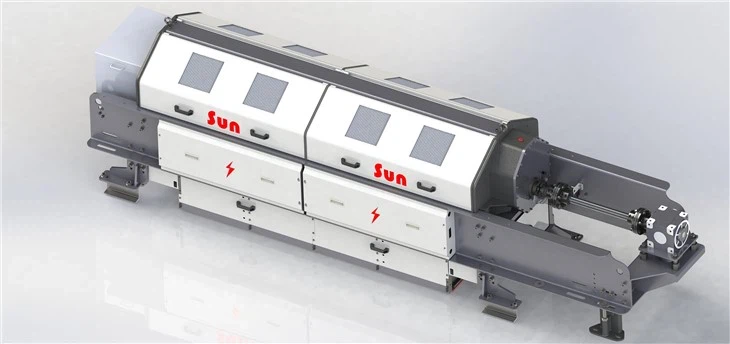
As a supplier of high-speed jacquard machines, we offer a wide range of Wall Cloth Jacquard Machine, Electronic Jacquard machine, and Casement Jacquard Machine. Whether you're looking for a circular machine for mass-producing tubular fabrics or a flat machine for creating detailed patterns on flat fabrics, we've got you covered.
Our machines are known for their high quality, reliability, and advanced technology. We work closely with our customers to understand their specific needs and provide them with the best solutions.
Conclusion
In conclusion, the choice between circular and flat high-speed jacquard machines depends on your specific requirements. If you need to produce large quantities of tubular fabrics quickly, a circular jacquard machine is the way to go. But if you're looking for high-precision, complex patterns on flat fabrics, a flat jacquard machine is the better option.
If you're in the market for a high-speed jacquard machine, I encourage you to get in touch with us. We'd be happy to discuss your needs and help you find the perfect machine for your business. Whether you're a small-scale textile producer or a large manufacturing company, we have the expertise and the products to meet your requirements.

References
- Textile Machinery Handbook
- Journal of Textile Science and Technology