

Hey there! As a supplier of Chain Jacquard Machines, I often get asked about the weight of these nifty devices. It's a question that might seem simple at first glance, but there's actually a lot more to it than you might think.
First off, let's talk about what a Chain Jacquard Machine is. It's a type of machine used in the textile industry to create intricate patterns on fabrics. The machine uses a series of chains to control the movement of the warp threads, allowing for highly detailed and complex designs. These machines have been around for a long time and have played a crucial role in the development of the textile industry.
Now, onto the weight. The weight of a Chain Jacquard Machine can vary significantly depending on several factors. One of the main factors is the size of the machine. Larger machines, which are capable of producing wider fabrics or more complex patterns, tend to be heavier. This is because they require more robust frames and components to support the additional mechanical parts and the weight of the materials being processed.
Another factor that affects the weight is the materials used in the construction of the machine. Machines made from high - quality, heavy - duty metals like cast iron or steel will naturally be heavier than those made from lighter materials. Cast iron is often used in the base and some of the major components of the machine because of its durability and ability to dampen vibrations, which is essential for smooth operation.

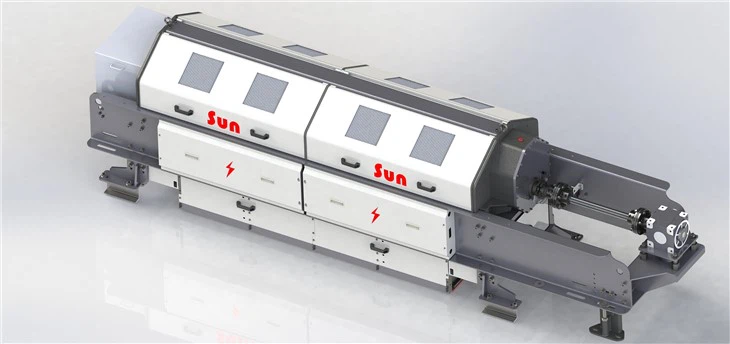
Let's take a look at some examples. A small - scale Chain Jacquard Machine, designed for home use or small - batch production, might weigh anywhere from 100 to 300 kilograms. These machines are relatively compact and are suitable for hobbyists or small businesses that don't need to produce large volumes of fabric.
On the other hand, industrial - grade Chain Jacquard Machines can be extremely heavy. Some of the larger models used in big textile factories can weigh several tons. For instance, a large - scale machine with a wide weaving width and advanced pattern - making capabilities could weigh upwards of 5 tons. These machines are built to handle continuous, high - volume production and need to be sturdy enough to withstand the rigors of daily use.
The weight of the machine also has implications for its installation and operation. A heavy machine requires a solid and stable foundation to prevent it from shifting or vibrating during operation. This might mean that the factory floor needs to be reinforced or specially designed to support the weight. Additionally, moving a heavy Chain Jacquard Machine can be a challenging task. It often requires specialized equipment like forklifts or cranes, and proper safety procedures need to be followed to avoid accidents.
When it comes to shipping, the weight of the machine is a critical factor. Shipping costs are often calculated based on weight, so a heavier machine will cost more to transport. This is something that both the supplier and the customer need to take into account. As a supplier, I always make sure to provide accurate weight information to my customers so they can plan for the shipping and installation process.
Now, if you're in the market for a Chain Jacquard Machine, you might also be interested in some related products. For example, an Electronic Jacquard machine offers more advanced features and greater precision in pattern - making. It uses electronic controls instead of mechanical chains, which allows for faster and more flexible operation.
Another option is the Rapier Loom with Electronic Jacquard. This combination of a rapier loom and an electronic jacquard system is ideal for producing a wide range of fabrics with different patterns and textures.
And if you're specifically interested in saree production, the Saree High Speed Rapier Loom Jaquard Machine is a great choice. It's designed to meet the unique requirements of saree weaving, offering high - speed production and excellent pattern quality.
In conclusion, the weight of a Chain Jacquard Machine is an important consideration that impacts many aspects of its use, from installation to shipping. Whether you're a small - scale producer or a large - scale textile manufacturer, understanding the weight and its implications will help you make an informed decision when purchasing a machine.
If you're thinking about buying a Chain Jacquard Machine or any of the related products I mentioned, I'd love to have a chat with you. We can discuss your specific needs, the weight and other features of the machines, and work out the best solution for your business. Don't hesitate to reach out and start the conversation.
References
- Textile Machinery Handbook, various editions
- Industry reports on textile manufacturing equipment