

As a supplier of Electronic Jacquard Modules, I've been asked numerous times about the compatibility of these modules with novelty yarns. Novelty yarns, known for their unique textures, colors, and irregularities, present a distinct set of challenges and opportunities in the weaving process. In this blog post, I'll explore whether an Electronic Jacquard Module can be effectively used for weaving with novelty yarns.
Understanding Electronic Jacquard Modules
Before delving into the topic, it's essential to understand what Electronic Jacquard Modules are. These modules are advanced components used in jacquard looms to control the movement of individual warp threads. They offer precise and programmable control, allowing for the creation of intricate patterns and designs on the woven fabric. Electronic Jacquard Modules have revolutionized the textile industry by enabling faster production, higher precision, and greater design flexibility compared to traditional mechanical jacquard systems.
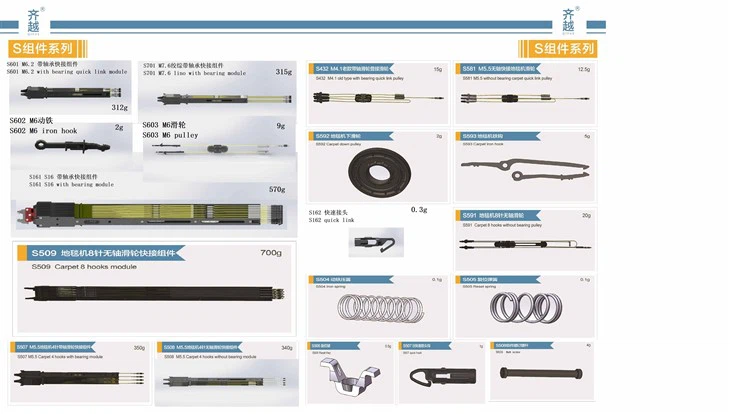
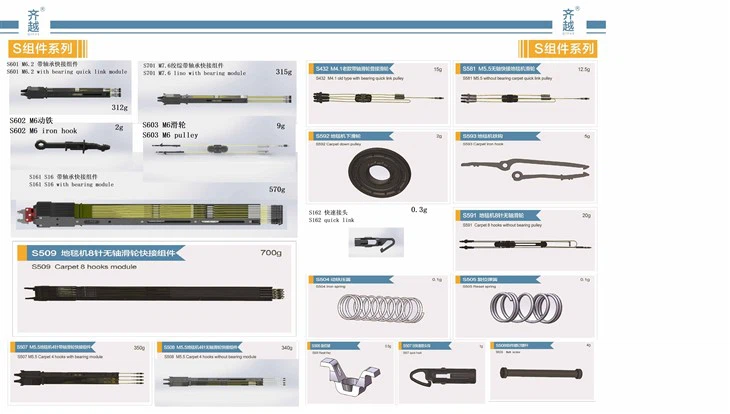
Our company offers a range of Electronic Jacquard Modules, including the M5.1 Without Bearing Normal Link Module, the M5.5 Carpet 4 Hooks With Bearing Module, and the Quick Link. Each module is designed to meet specific weaving requirements, from fine fabrics to heavy carpets.
Characteristics of Novelty Yarns
Novelty yarns are a diverse group of yarns that deviate from the standard smooth and regular appearance of traditional yarns. They can be made from various fibers, including natural, synthetic, or a blend of both. The defining feature of novelty yarns is their unique visual and tactile qualities, which are achieved through special spinning techniques, the addition of embellishments, or the use of irregularly shaped fibers.
Some common types of novelty yarns include:
- Slub yarns: These yarns have thick and thin sections along their length, creating a textured and uneven appearance.
- Chenille yarns: Chenille yarns are characterized by their fuzzy, velvety texture, which is created by cutting short lengths of yarn and attaching them to a core thread.
- Metallic yarns: Metallic yarns contain metal fibers or foils, adding a shiny and reflective element to the fabric.
- Bouclé yarns: Bouclé yarns have loops or curls along their length, giving them a bouncy and textured appearance.
Challenges of Weaving with Novelty Yarns
Weaving with novelty yarns presents several challenges compared to using traditional yarns. The irregularities in the yarn's structure can cause issues such as:
- Tangling and snags: The loops, slubs, and embellishments in novelty yarns can easily get caught on the loom's components, leading to tangles and snags. This can disrupt the weaving process and result in uneven fabric quality.
- Uneven tension: Novelty yarns often have inconsistent thickness and density, which can make it difficult to maintain even tension during weaving. Uneven tension can cause the fabric to pucker, stretch, or have a distorted appearance.
- Pattern distortion: The unique texture and appearance of novelty yarns can affect the clarity and accuracy of the woven pattern. The irregularities in the yarn may obscure the details of the design or cause the pattern to appear distorted.
Advantages of Using Electronic Jacquard Modules for Weaving with Novelty Yarns
Despite the challenges, Electronic Jacquard Modules offer several advantages when it comes to weaving with novelty yarns:
- Precise control: Electronic Jacquard Modules provide precise control over the movement of individual warp threads, allowing for greater flexibility in managing the irregularities of novelty yarns. The modules can be programmed to adjust the tension, speed, and timing of the warp threads to accommodate the unique characteristics of the yarn.
- Pattern customization: With an Electronic Jacquard Module, it's possible to create intricate and complex patterns that complement the unique texture and appearance of novelty yarns. The module can be programmed to incorporate the irregularities of the yarn into the design, creating a one-of-a-kind fabric.
- Reduced downtime: The advanced technology in Electronic Jacquard Modules helps to minimize the risk of tangles and snags, reducing downtime and increasing productivity. The modules can detect and correct issues in real-time, ensuring a smooth and efficient weaving process.
Tips for Using Electronic Jacquard Modules with Novelty Yarns
To achieve the best results when using Electronic Jacquard Modules for weaving with novelty yarns, consider the following tips:
- Choose the right module: Select an Electronic Jacquard Module that is suitable for the type and weight of the novelty yarn you're using. Our M5.1 Without Bearing Normal Link Module is ideal for fine fabrics, while the M5.5 Carpet 4 Hooks With Bearing Module is better suited for heavier carpets.
- Test the yarn: Before starting a large-scale weaving project, it's a good idea to test the novelty yarn on a small sample using the Electronic Jacquard Module. This will allow you to adjust the settings and ensure that the yarn behaves as expected.
- Adjust the tension: Pay close attention to the tension of the novelty yarn during weaving. Adjust the tension settings on the Electronic Jacquard Module as needed to maintain even tension and prevent tangles.
- Modify the pattern: When designing the pattern, take into account the unique characteristics of the novelty yarn. You may need to modify the design to accommodate the irregularities in the yarn and enhance its visual impact.
Case Studies
To illustrate the effectiveness of using Electronic Jacquard Modules for weaving with novelty yarns, let's look at a few case studies:
Case Study 1: Weaving a Chenille Fabric
A textile manufacturer wanted to create a high-quality chenille fabric with a complex geometric pattern. They used our M5.1 Without Bearing Normal Link Module to control the movement of the warp threads. The module's precise control allowed them to manage the fuzzy texture of the chenille yarn and create a fabric with a clear and well-defined pattern. The resulting fabric was highly sought after in the market for its unique combination of texture and design.
Case Study 2: Weaving a Metallic Carpet
A carpet manufacturer wanted to produce a luxurious metallic carpet with a detailed floral pattern. They chose our M5.5 Carpet 4 Hooks With Bearing Module for its ability to handle heavy yarns and create intricate patterns. The module's advanced technology helped to minimize the risk of tangles and snags, ensuring a smooth and efficient weaving process. The final carpet had a stunning appearance, with the metallic yarn adding a touch of elegance to the floral design.
Conclusion
In conclusion, an Electronic Jacquard Module can be effectively used for weaving with novelty yarns. While there are challenges associated with using these yarns, the precise control, pattern customization, and reduced downtime offered by Electronic Jacquard Modules make them a valuable tool for creating unique and high-quality fabrics. By choosing the right module, following the tips outlined above, and learning from successful case studies, you can achieve excellent results when weaving with novelty yarns.
If you're interested in exploring the possibilities of using our Electronic Jacquard Modules for weaving with novelty yarns, we'd love to hear from you. Contact us today to discuss your specific requirements and learn more about our products.
References
- Smith, J. (2020). Textile Weaving Techniques. New York: Textile Press.
- Johnson, A. (2019). Novelty Yarns: A Guide to Design and Use. London: Yarn Publishing.
- Brown, C. (2018). Electronic Jacquard Systems: Technology and Applications. Tokyo: Loom Technology Institute.