

Altitude is a factor that can significantly influence the performance of various mechanical components, and the Jacquard Pulley is no exception. As a supplier of Jacquard Pulleys, I've witnessed firsthand how different environmental conditions, especially altitude, can impact the functionality and efficiency of these crucial parts. In this blog, we'll delve into the scientific aspects of how altitude affects the performance of a Jacquard Pulley.
Atmospheric Pressure and its Impact
One of the primary factors affected by altitude is atmospheric pressure. As altitude increases, the atmospheric pressure decreases. This reduction in pressure can have a direct impact on the lubrication within the Jacquard Pulley. In a normal, low - altitude environment, the lubricating oil in the pulley system forms a stable film between moving parts, reducing friction and wear. However, at higher altitudes, the lower atmospheric pressure can cause the lubricating oil to vaporize more easily.
When the lubricating oil vaporizes, the protective film between the pulley's moving parts becomes thinner or even breaks down in some areas. This leads to increased friction between the components of the Jacquard Pulley. For instance, the contact surfaces of the pulley wheels and the belts may experience more wear and tear. This can result in a decrease in the overall efficiency of the pulley system. If the friction increases too much, it may also cause the pulley to heat up more rapidly. Excessive heat can further degrade the lubricant and potentially damage the pulley's materials, leading to premature failure.
Temperature Variations
Altitude also brings about significant temperature variations. Generally, as altitude rises, the temperature drops. The temperature change can affect the materials used in the Jacquard Pulley. Different materials have different coefficients of thermal expansion. For example, metals expand when heated and contract when cooled. In a Jacquard Pulley, which often consists of multiple metal components, the varying temperature at different altitudes can cause differential expansion and contraction.
If the temperature drops at high altitudes, the metal parts of the pulley may contract. This can lead to changes in the clearances between different components. For instance, the fit between the pulley shaft and the bearing may become too tight, increasing the load on the bearing and potentially causing it to seize. On the other hand, if the temperature suddenly rises due to the heat generated by friction, the expansion of the metal parts may cause interference within the pulley system, leading to abnormal operation.
Air Density and Aerodynamics
Air density is another important factor affected by altitude. As altitude increases, air density decreases. In a Jacquard Pulley system, especially those with high - speed rotating parts, air density plays a role in aerodynamics. At lower altitudes, the higher air density provides more resistance to the rotating pulley. This resistance can act as a damping force, which can help to stabilize the rotation of the pulley.
However, at higher altitudes, the lower air density means less resistance. While this may seem like it would result in less energy loss due to air resistance, it can also lead to instability in the pulley's rotation. The lack of damping force can cause the pulley to vibrate more easily. These vibrations can not only affect the accuracy of the Jacquard mechanism but also increase the stress on the pulley components, leading to potential fatigue failure over time.

Impact on Specific Jacquard Pulley Models
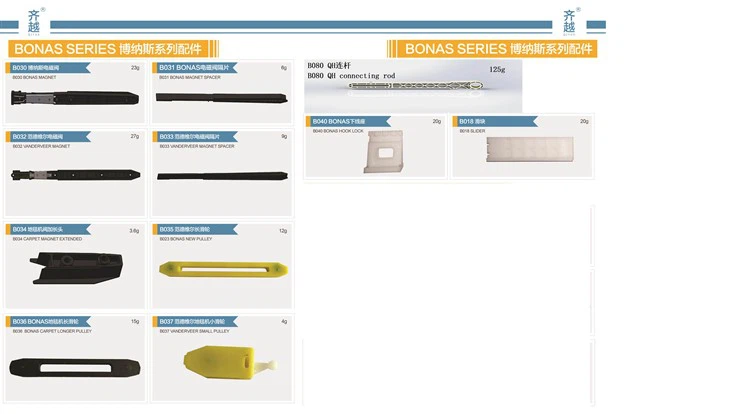
Let's take a look at how altitude affects some of our specific Jacquard Pulley models. The Vanderveer Magnet is a high - precision pulley model often used in advanced Jacquard systems. Due to its precision requirements, it is more sensitive to the changes in environmental conditions caused by altitude. The reduced air density at high altitudes can cause the pulley to vibrate more, which may affect the accuracy of the magnetic control system within the Vanderveer Magnet pulley.
The MJ Small Pulley is designed for compact Jacquard systems. Its small size means that any changes in the clearances due to temperature variations can have a relatively larger impact. At high altitudes, the contraction of the metal parts may cause the already small clearances in the MJ Small Pulley to become even smaller, potentially leading to jamming.
The Vanderveer Small Pulley is a popular choice for small - scale Jacquard operations. The lower atmospheric pressure at high altitudes can cause the lubricant in this pulley to vaporize more quickly, increasing friction and wear. This can reduce the lifespan of the Vanderveer Small Pulley and may require more frequent maintenance.
Mitigating the Effects of Altitude
As a supplier, we understand the challenges that altitude can pose to the performance of Jacquard Pulleys. To mitigate these effects, we offer several solutions. Firstly, we can provide special lubricants that are more resistant to vaporization at low atmospheric pressures. These lubricants can maintain a stable film between the moving parts, even at high altitudes.
We also offer pulleys made from materials with low coefficients of thermal expansion. These materials can better withstand the temperature variations at different altitudes, reducing the risk of differential expansion and contraction. Additionally, we can design pulleys with improved aerodynamic features to reduce the impact of low air density on the pulley's rotation stability.
Conclusion
In conclusion, altitude has a multi - faceted impact on the performance of Jacquard Pulleys. The changes in atmospheric pressure, temperature, and air density can all affect the lubrication, material properties, and rotation stability of the pulleys. However, with our expertise as a Jacquard Pulley supplier, we are well - equipped to provide solutions to mitigate these effects.
If you are in the market for Jacquard Pulleys, especially for applications in high - altitude areas, we invite you to contact us for a detailed discussion. Our team of experts can help you select the most suitable pulley models and provide customized solutions to ensure optimal performance in your specific environment.
References
- Engineering Mechanics of Materials, by E. P. Popov.
- Handbook of Tribology: Materials, Coatings, and Surface Treatments, edited by Bharat Bhushan.
- Aerodynamics for Engineers, by John J. Bertin and Russel M. Cummings.