

Hey there! As a supplier of Jacquard Pulleys, I often get asked about the standard sizes of these essential components in the textile industry. In this blog post, I'm gonna break down everything you need to know about the standard sizes of Jacquard Pulleys, and also share some insights into how these sizes impact the performance of your textile machinery.
First off, let's understand what Jacquard Pulleys are. They are a crucial part of Jacquard looms, which are used to create intricate and detailed patterns in fabrics. These pulleys play a vital role in the operation of the loom, helping to control the movement of the warp and weft threads. Different sizes of Jacquard Pulleys are designed to meet the specific requirements of various types of looms and the patterns they are intended to produce.
Now, let's talk about the standard sizes. There isn't a one - size - fits - all answer here, as the sizes can vary depending on the make and model of the Jacquard loom. However, there are some common sizes that are widely used in the industry.
The diameter of Jacquard Pulleys can range from as small as 20mm to as large as 100mm. Smaller diameter pulleys are often used in more compact looms or in situations where space is limited. They are also useful for applications that require a higher rotational speed. On the other hand, larger diameter pulleys are typically found in larger, more industrial - scale looms. They can handle heavier loads and are better suited for producing larger and more complex patterns.
Another important dimension is the width of the pulley. The width can vary from 10mm to 50mm. A narrower pulley is suitable for looms that use thinner threads or for applications where precision is key. A wider pulley, however, can accommodate thicker threads and is often used in looms that produce heavier fabrics.
The bore size of the pulley is also a critical factor. This is the size of the hole in the center of the pulley that fits onto the shaft. Bore sizes usually range from 5mm to 25mm. The right bore size ensures a proper fit on the shaft, which is essential for the smooth operation of the pulley and the overall performance of the loom.
When it comes to the materials used in Jacquard Pulleys, they are commonly made from high - quality plastics, metals like aluminum or steel, or a combination of both. The choice of material depends on factors such as the load capacity, the operating environment, and the cost. For example, plastic pulleys are lightweight and corrosion - resistant, making them a good choice for smaller, less demanding looms. Metal pulleys, on the other hand, are more durable and can handle heavier loads, but they are also more expensive.
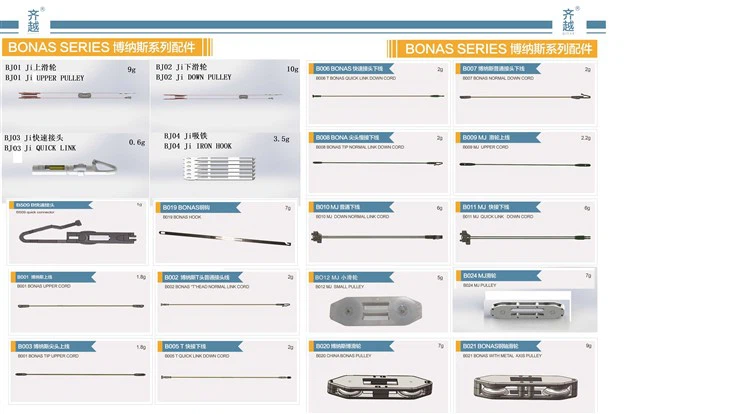
Now, let's take a look at some of the related products that work in conjunction with Jacquard Pulleys. One such product is the Bonas Tip Upper Cord. This cord is an important part of the Jacquard mechanism, working in harmony with the pulleys to control the movement of the warp threads. It is designed to be strong and flexible, ensuring smooth and accurate operation.
Another related product is the QH Connecting Rod. The connecting rod is responsible for transferring the motion from the Jacquard mechanism to the loom. It needs to be precisely engineered to ensure that the patterns are reproduced accurately. The size and shape of the connecting rod are carefully designed to match the specific requirements of the Jacquard Pulleys and the loom.
The T Bonas Quick Link Down Cord is also an essential component. This cord is used to connect different parts of the Jacquard system, allowing for quick and easy adjustments. It is designed to be reliable and easy to install, which is crucial for minimizing downtime during maintenance and setup.
So, why does it matter to get the right size of Jacquard Pulleys? Well, using the wrong size can lead to a whole host of problems. If the pulley is too small for the load, it can wear out quickly, leading to frequent replacements and increased costs. It can also cause the loom to operate inefficiently, resulting in lower quality fabrics. On the other hand, if the pulley is too large, it can take up unnecessary space and may not fit properly into the loom's mechanism.
As a supplier, I understand the importance of providing the right size of Jacquard Pulleys to my customers. That's why I offer a wide range of sizes and materials to meet the diverse needs of the textile industry. Whether you're a small - scale artisanal weaver or a large - scale textile manufacturer, I've got you covered.
If you're in the market for Jacquard Pulleys or any of the related products I've mentioned, don't hesitate to reach out. I'm here to help you find the perfect solution for your specific requirements. Whether you need advice on the right size, want to place an order, or have any other questions, I'm just a message away.
In conclusion, the standard sizes of Jacquard Pulleys can vary, but by understanding the key dimensions like diameter, width, and bore size, you can make an informed decision when choosing the right pulleys for your loom. And with the right pulleys and related components, you can ensure the smooth and efficient operation of your textile machinery, resulting in high - quality fabrics. So, if you're looking to upgrade your loom or start a new project, get in touch and let's work together to find the best solution for you.
References:

- Textile Machinery Handbook: A comprehensive guide to the components and operation of textile machinery.
- Industry reports on the latest trends and standards in Jacquard loom technology.