

Hey there! As a supplier of Jacquard Harness Pulleys, I've been getting a lot of questions about the power transmission efficiency of these little wonders. So, I thought I'd sit down and share what I know with you all.
First off, let's talk about what a Jacquard Harness Pulley is. For those of you who aren't in the textile industry, a Jacquard Harness Pulley is a crucial component in a Jacquard loom. The Jacquard loom is used to create intricate patterns on fabric, and the pulleys play a key role in the operation of the harness system that controls the movement of the warp threads.
Now, onto the main topic - power transmission efficiency. In simple terms, power transmission efficiency refers to how well a system can transfer power from one point to another. In the case of a Jacquard Harness Pulley, it's about how effectively the pulley can transfer the power from the loom's driving mechanism to the harness system.
There are several factors that can affect the power transmission efficiency of a Jacquard Harness Pulley. One of the most important factors is the design of the pulley itself. A well - designed pulley will have a smooth surface and the right shape to minimize friction. Friction is the enemy when it comes to power transmission efficiency because it causes energy to be lost as heat. For example, if the pulley has rough edges or an irregular shape, it can increase the friction between the pulley and the cord that runs around it. This means that more power is needed to move the cord, and less of the power from the driving mechanism is actually being used to operate the harness system.
Another factor is the material of the pulley. Different materials have different properties that can impact power transmission efficiency. For instance, a pulley made from a high - quality plastic might be lighter and have less friction compared to a metal pulley. However, it also needs to be strong enough to withstand the forces involved in the operation of the loom. Some pulleys are coated with special materials to reduce friction even further.
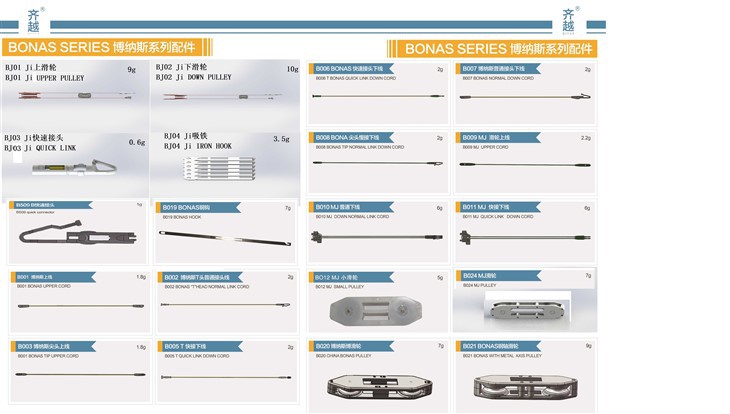
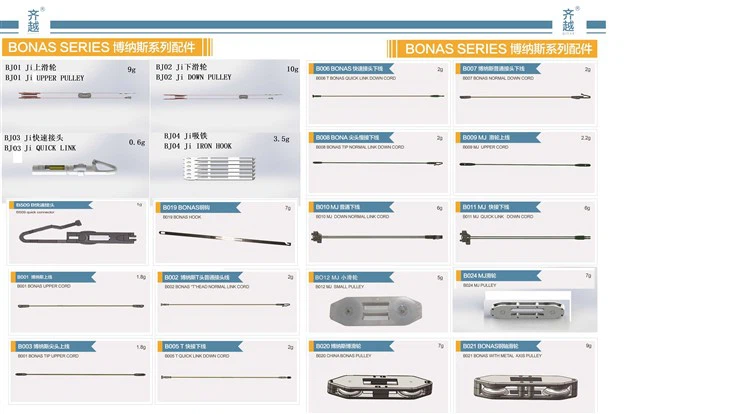
The type of cord used with the Jacquard Harness Pulley also matters. There are different types of cords available, such as the Bonas Tip Normal Link Down Cord, the T Bonas Quick Link Down Cord, and the Bonas Tip Upper Cord. Each type of cord has its own characteristics. A cord that is too thick or too stiff can increase friction and reduce power transmission efficiency. On the other hand, a cord that is too thin might not be strong enough to handle the load.
The tension of the cord is another crucial factor. If the cord is too loose, it can slip on the pulley, which means that power is not being transferred effectively. On the other hand, if the cord is too tight, it can put extra stress on the pulley and other components of the system, which can also lead to a decrease in efficiency. Finding the right tension is a bit of a balancing act, but it's essential for optimal power transmission.
Let's talk about how we measure power transmission efficiency. One common way is to compare the input power (the power supplied by the driving mechanism) to the output power (the power actually used by the harness system). The formula for calculating efficiency is: Efficiency = (Output Power / Input Power) x 100%. For example, if the input power is 100 watts and the output power is 80 watts, the power transmission efficiency is 80%.
In a real - world scenario, achieving high power transmission efficiency is not just about the technical aspects. It also has practical implications for textile manufacturers. A more efficient Jacquard Harness Pulley system means less energy consumption. This can lead to significant cost savings in the long run, especially for large - scale textile production. It also means that the loom can operate more smoothly and with fewer breakdowns. A system with high power transmission efficiency is less likely to experience issues such as cord slippage or excessive wear and tear on the pulleys and other components.
As a supplier, we're constantly working on improving the power transmission efficiency of our Jacquard Harness Pulleys. We invest in research and development to come up with better designs and use the latest materials. We also provide our customers with guidance on how to choose the right pulleys and cords for their specific needs and how to set up the system for optimal performance.
If you're in the textile industry and looking for high - quality Jacquard Harness Pulleys, we'd love to hear from you. Whether you're a small - scale artisanal weaver or a large - scale textile manufacturer, we have the products and expertise to meet your needs. Contact us to discuss your requirements and start a conversation about how we can help improve the power transmission efficiency of your Jacquard loom.
References:
- Industry knowledge and experience in Jacquard Harness Pulley manufacturing
- Textile machinery engineering textbooks and research papers on power transmission in industrial systems